Basic metrics in TrackLab

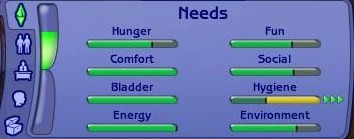
Have you played The Sims? Each Sim has several metrics for their needs. Hygiene, Comfort, Social etc. Your goal as a player is to keep your Sim satisfied.

This idea was used in TrackLab, but I chose only three metrics: satiety, energy, and mood. Why these?

First, they are universal parameters which anyone can evaluate anywhere and anytime. All you need is just think about them.

Continue reading →
My first TrackLab user experience

I started to use TrackLab one week ago when version 0.3.2 was released. This release had backups, which are an essential feature for testing period. Before that, I made all my records in MD files starting from August 4. Here I want to share my first impressions as a user, not a developer.

Import/export feature

First of all, I imported all my records from MD files into the app to keep all history in one place. This process ran smoothly, but it was quite tedious to import all 52 files one by one. One for each date between August 4 and September 24. I don’t think anybody will ever do this again, so it’s not a big problem.

Continue reading →

TrackLab v0.3.0 release

Finally I finished developing version 0.3.0, and it took me almost two weeks. Initially, I planned to make new releases in less than a week, but I wanted to implement achievements so badly.

I planned to add achievements after finishing all the main features, but it’s so tempting to make such stuff. And I thought, what’s the point of creating something if you just can’t do what you like.

Continue reading →

Minimalism

Etsbox.com and TrackLab have pretty minimalistic design. That’s because I am not a designer. I have no experience. In all my jobs, I had design layouts – I only had to convert them into HTML/CSS.

When it comes to choosing UI elements appearence I struggle every time. What color? What shape? Borders? Fonts? Paddings? What about animations? A designer has answers. I don’t.

That’s why I prefer default elements and minimalistic design. And I believe this approach is good for UX: users don’t get distracted by fancy fonts, colors, and animations. They may look cool, but often you simply don’t need them.

Continue reading →

About my previous app

Every app tries to solve some problem that its creator once struggled with. This is the story of my first productivity app — and the burnout that followed.

That’s why I was trying to create an app that could help with making decisions and starting to act. Sometimes the problem is so bad that I just decide to avoid choosing and to do nothing. My dream was an app which would suggest what to do.

Continue reading →

TrackLab demo

I always felt that asking people to download an APK from an unknown website looks suspicious. Even though I can guarantee that TrackLab doesn’t collect data or contain malware, words alone aren’t enough.

That’s why I’ve published a web version of TrackLab, which you can try here: TrackLab Web Demo

This is the full version, running entirely in your browser thanks to the web framework I’m using.

Continue reading →

Why Markdown format used for import and export in TrackLab

When I showed my app to my friend and mentioned that it supports export in MD format, he immediately asked: “Markdown? What is it?”

I didn’t have time to explain back then, but the question stuck with me. So here’s my attempt to give a simple answer – and explain why Markdown became the format of choice for TrackLab.

The reason is quite simple. Before starting development, I tried to find out whether my theory would work or not. I used Obsidian for that purpose. Obsidian uses the MD format. That’s it.

That was for TL;DR lovers. Details below.

Continue reading →

TrackLab release

After a week of development, I’m glad to present my new application – TrackLab. It doesn’t do much now, but my goal was to make an MVP as soon as possible. All you can do with the app fits in a short list:

  • Track your activity. Just write what you did, how you felt about it, and when it happened.
  • Watch your activity history. Sometimes it’s quite interesting to know what you did a week, month, or year ago. Isn’t it?
  • Calculate average values. Choose a period of time to see your average mood, energy, and satiety within that period.
Continue reading →