

I already answered the question Why should you try tracking your time?. It was a general reasoning about tracking benefits. Now I want to tell about people who, in my opinion, would be interested in those benefits.
Who feels lost
As I mentioned in the post about “Why?”, tracking is a good starting point toward any improvement. The key word is “starting”. Who needs a starting point? Those who are lost.
There was a time right before I started tracking when I was spending hours doomscrolling. I tried to stop, but I couldn’t find anything interesting to do. I recalled that in the past everything was better. What happened? I couldn’t find the answer. My job was the same and my living conditions didn’t change either. I just didn’t know where I was going or why I felt lost.
Then I thought: what if I had a list of my actions and mood-level records? I could plot a graph and see the moment or period when my daily routine went wrong. Changes happen gradually, and it’s almost impossible to notice them without tracking.
So, if you feel lost and don’t know what to do, it’s a good idea to track your time. You’ll see what’s going on and it will help you take control of your daily routine.
Who wants to change their habits
Our mind tricks us all the time. When you try to be healthy, it reminds you how delicious fast food is. When you’re going to watch short videos for five minutes, an hour flies by. When you are about to start work or study, it finds a good reason to do it later.
The reason why you lose the fight with your brain is that you don’t have the facts to prove it wrong. Time goes fast when you do enjoyable things. Because it goes fast, the brain remembers that it wasn’t enough. And its position is that “not enough” means you should do it again. More and more!
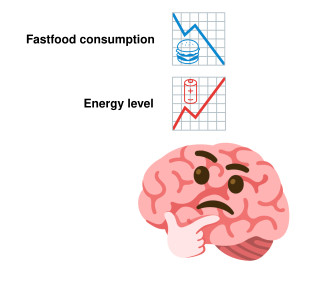
What can you do? For example, you regularly eat fast food and want to stop or at least to eat it less. The first fact you need to know is how often you do it. Let’s say four times per week. During the first week, you just track your eating habits. That’s your starting point.
Then you reduce your trips to McDonald’s to three times per week, then two, and so on. It’s important to track along with recording your mood, satiety, and energy levels. Why? Because these are your facts to prove the benefits of a healthy lifestyle. When you see real impact with numbers, it’s a completely different thing than a simple belief.
Who wants to improve their efficiency
If you want to calculate your own KPI, you should track your time. In TrackLab, you can tag some key actions as #useful and #useless and then look at the stats to see how much time you spent on each tag.
When you see which useless actions drain your time, try time-management methods and compare the results before and after. Choose the method that increases your efficiency.
Who likes a scientific approach
I talked about a scientific approach in a previous post. People who like to check different statements could use TrackLab.
For example, I treat dietary supplements with distrust. I think the manufacturers exaggerate their effect, and in most cases they work as a placebo. But it’s a good opportunity to check that.
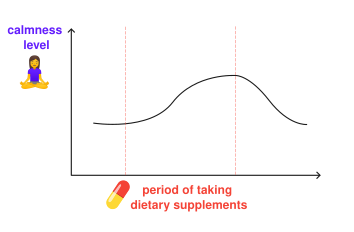
If it’s promised that some dietary supplement can make you calmer, you could track your calmness level for a period of time. If there is a real impact, you will notice it. Then quit taking it and see if the average level drops to the initial value.
Conclusion
Tracking can help you in various situations. It is a starting point for your endeavors. You’ll gain control over your routine, change your habits, improve your efficiency, or even conduct a scientific experiment.
TrackLab is a free tool for tracking your activity. Download it and start tracking right away.